Network segmentation What is network segmentation?
Network segmentation is a security practice that divides a network into smaller subnetworks to improve security, reduce traffic congestion, and enhance performance.
Time to read: 6 minutes 26 seconds | Updated: November 16, 2026
Table of Contents
Key takeaways
- Network segmentation divides a network into smaller, isolated zones with controlled traffic between users, devices, and applications.
- It strengthens security by limiting unauthorized access, lateral movement, and thus the potential impact of a breach.
- It can improve performance, visibility, troubleshooting, and compliance by reducing congestion and isolating sensitive systems.
What are the main components of network segmentation?
Network segmentation divides a network into smaller, isolated segments based on factors such as function, security requirements, workload, and data sensitivity. Key components of network segmentation include VLANs, subnets, firewalls, access control policies, routing rules, identity-based controls, and monitoring to regulate traffic between segments.
Network segmentation explained
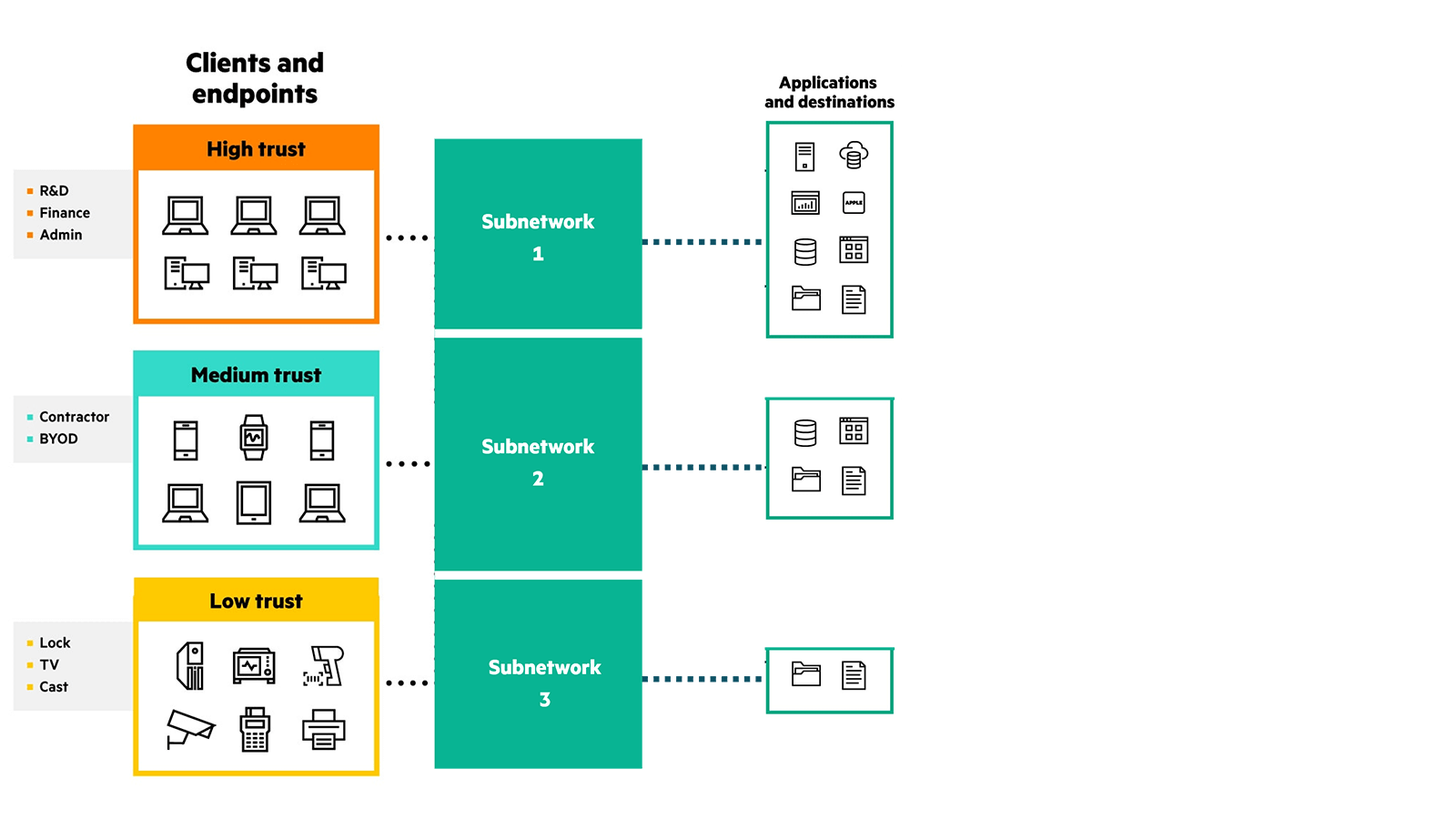
Network segmentation is a security practice of dividing a network into smaller subnetworks, with each dedicated to specific groups of devices, users, or resources. This practice strengthens cybersecurity by controlling traffic flow between subnetworks or segments, thereby containing any potential security breaches within a specific segment and helping to prevent lateral spread of threats. It also improves network performance by isolating critical resources from non-essential workloads.
Network segmentation enhances north-south security by reducing the attack surface and regulating traffic between different segments based on predefined policies. For example, in a large enterprise that provides network access to employees, contractors, and IoT devices, segmentation can enforce security policies on the basis of trust level of connecting devices, preventing IoT devices from accessing sensitive systems, such as financial or HR systems, while prioritizing network resources for employees working with critical resources.
What are the different types of network segmentation?
Two types of network segmentation cater to different security requirements:
- Physical segmentation: Also known as perimeter-based segmentation, this method physically segments a network using firewalls, switches, and internet connections. Different device groups are plugged into separate switches. This type of segmentation is more secure but less scalable and cost effective.
- Virtual segmentation: Also known as logical segmentation, this method segments physical networks into logically isolated virtual networks using technologies like VLANs (Virtual Local Area Networks). Virtually segmented networks behave like separate networks with different security policies. This type of segmentation is cost effective but becomes increasingly complex and resource intensive as the network expands.
What are the benefits of network segmentation?
Segmentation improves network security, efficiency, and management by:
- Containing security breaches: Network segmentation enables regulated network access control in each subnetwork, limiting attack surfaces and keeping breaches from spreading to other subnetworks.
- Improving regulatory compliance: Regional regulatory and industry-specific compliance frameworks like GDPR, PCI DSS, etc., mandate limiting user and device access to data. Network segmentation restricts device and user access by controlling what subnetworks they connect to. Network segmentation can also simplify compliance audits by limiting reviews only to affected subnetworks (e.g. financial data), as opposed to the entire network.
- Making the network more efficient: Network segmentation decongests the network by separating essential and non-essential traffic. For example, guests and employees can connect to separate subnetworks so any bandwidth issues in the guest subnetwork doesn't impact network performance for employees.
- Focusing troubleshooting: Network segmentation helps IT and security teams narrow their scope and rapidly fix issues, only needing to focus on subnetworks where a network issue or security breach has occurred.
What are the top use cases for network segmentation?
- Guest access: Network segmentation enables security teams to offer network access to guests at minimum risk. Whenever a user logs in as a guest, they are connected only to the guest subnetwork, offering internet connection but little to no access to the corporate network.
- BYOD and IoT devices access: BYOD and IoT devices can be high security breach targets. Connecting them to an isolated subnetwork with strong access policies is a practical way to limit security breaches originating from these devices.
- User group access: Different user groups need different levels of access. An engineering team shouldn't have access to financial data or HR systems. By connecting different user groups to different subnetworks, security teams can limit which group accesses what, bridging any security gaps.
- Network audit: Regulatory compliance requires critical information like financial data, credit card details, or personal information to be stored securely—necessitating tighter control and audits. Network segmentation limits access to critical information by putting the data in a separate subnetwork and securing it with strong security policies.
What is the difference between network segmentation and microsegmentation?
Network segmentation involves dividing a large network into smaller segments or subnetworks to improve network efficiency and security. Microsegmentation is further segmentation of subnetworks based on workloads or applications. Microsegmentation takes security to a more granular level and secures applications within different subnetworks using tighter security policies.
Network segmentation provides strong north-south traffic control whereas microsegmentation is generally used for controlling east-west traffic.
How does network segmentation enable Zero Trust?
Zero Trust works on the principle of the least privilege access. Network segmentation enables Zero Trust at the network level by restricting access to users and devices based on their type. Guests and contractors can be separated from employee segments and operational IoT device groups can be separated from financial systems.
Network segmentation adds an extra security layer around different resources and can help prevent security breaches from expanding to lateral segments.
Network segmentation and HPE Aruba Networking
HPE Aruba Networking offers a modern approach to network segmentation via its Dynamic Segmentation approach. Dynamic Segmentation utilizes policy-based access control across wired, wireless, and WAN infrastructure, ensuring that users and devices can only communicate with destinations consistent with their access permissions—foundational for Zero Trust and SASE frameworks.HPE Aruba Networking supports two models of Dynamic Segmentation based on an organization's overall network architecture and choice of overlay. Centralized and Distributed.
With the centralized Dynamic Segmentation, traffic is kept secure and separated using GRE tunnels between access points and HPE Aruba Networking gateways. Cloud Auth cloud-native network access control (NAC), HPE Aruba Networking ClearPass Policy Manager, and HPE Aruba Networking Central NetConductor provide role and access definition and management capabilities. Gateways function as ingress policy enforcement points via the HPE Aruba Networking Layer 7 Policy Enforcement Firewall (PEF).
Distributed Dynamic Segmentation uses an EVPN/VXLAN overlay, cloud-native NAC, and HPE Aruba Networking Central NetConductor cloud-native services. Policy is enforced inline via HPE Aruba Networking gateways and fabric-capable switches that interpret access control information carried in standards-based global policy identifiers (GPIDs).
FAQs for network segmentation
What are the best practices for network segmentation?
First, inventory subjects on the network: identify critical assets, classify data and workloads, and understand the roles of users and devices. Next, define security zones based on similarity of risk profile, function, and resource access. Finally, enforce least-privilege access by defining and applying consistent policies, monitoring traffic, regularly reviewing rules, and testing controls to adapt to changing threats and business requirements.
Why is network segmentation important for cybersecurity?
Network segmentation supports Zero Trust architectures and strengthens cybersecurity by limiting unauthorized access and restricting lateral movement across an enterprise network. By isolating critical systems, sensitive data, and workloads, organizations can reduce their attack surface, contain breaches, limit malware propagation, and improve visibility and control over network traffic.
What is the difference between network segmentation and microsegmentation?
Network segmentation divides a network into larger zones using technologies such as VLANs, subnets, and firewalls. Microsegmentation creates finer-grained security boundaries around individual workloads, applications, or devices. Both control traffic and limit lateral movement, but microsegmentation enables more granular, workload-level security policies.
How do you implement network segmentation in an enterprise?
To implement network segmentation, map network assets and traffic flows, classify workloads by risk and business function, and define security zones. Use VLANs, subnets, firewalls, and access control policies to enforce boundaries. Start with critical assets, test connectivity, monitor traffic, and refine policies as the environment evolves. Continue to evaluate network segmentation practices and strategies to avoid sprawl that can make management too complex.
How does network segmentation support Zero Trust?
Network segmentation supports Zero Trust strategies by restricting communication between network zones and allowing enforcement of least-privilege access. Combined with comprehensive visibility of subjects, identity verification, contextual policies, and adaptive trust based on subject behavior, segmentation reduces lateral movement and helps ensure users, devices, and workloads access only authorized resources.
How do firewalls implement network segmentation?
Firewalls implement network segmentation by enforcing security policies on traffic moving between network zones. They inspect connections, apply rules based on IP addresses, ports, applications, users, or other context, and block unauthorized communication. Properly configured firewalls help isolate sensitive assets and control access across campus, branch, data center, and cloud environments.
How does network segmentation contain a security breach?
Network segmentation contains a security breach by isolating affected systems and restricting communication with other network segments. These boundaries limit an attacker's ability to move laterally, access sensitive data, or spread malware like ransomware. Combined with monitoring and incident response, segmentation can help reduce the scope and impact of an incident.
What should enterprises look for in a network segmentation solution?
Enterprises should look for a network segmentation solution that supports granular access controls, centralized policy management, comprehensive real-time visibility, and integration with existing security tools. Consider scalability across campus, branch, data center, and cloud environments, as well as automation, policy consistency, performance, and the ability to enforce Zero Trust principles. A solution that makes security a natural part of network management workflow can help network and security teams achieve mutual objectives of performance and protection without compromise.