Outdoor access point (AP) What is an outdoor access point (AP)?
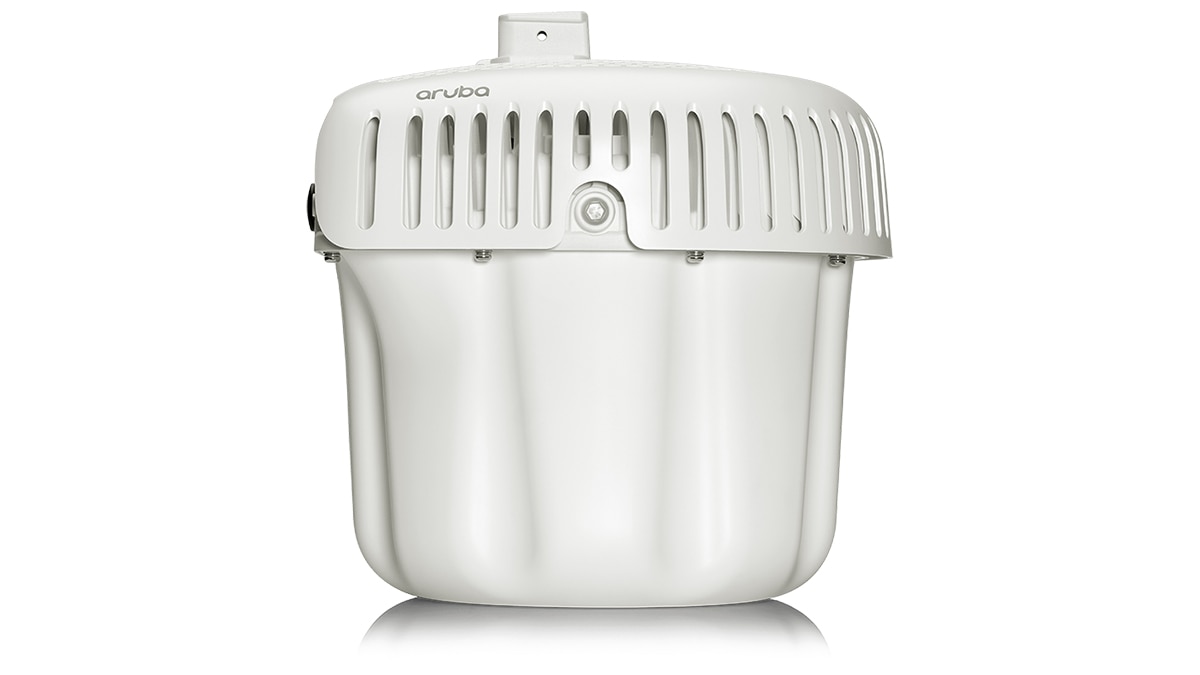
Outdoor access points (APs) are networking devices that provide wireless local area network (WLAN) connectivity in a form factor that protects against challenging environmental conditions—from outdoor public venues to oil rigs. Outdoor APs offer weatherproof and temperature ratings for challenging environments, with some models supporting Hazardous Locations certifications. Advanced models may also provide Bluetooth Low Energy (BLE) and Zigbee wireless connectivity for support of IoT devices.
Time to read: 5 minutes 31 seconds | Published: July 20, 2026
Table of Contents
Key takeaways for outdoor access point
- Outdoor access points provide wireless connectivity in harsh environments, delivering WLAN access in locations such as public venues, industrial sites, and hazardous areas with rugged, weatherproof designs.
- They enable flexible, cable-free connectivity, using Wi‑Fi radio technology to connect devices and support mobility, while reducing the need for extensive wired infrastructure.
- Built for performance and IoT support, outdoor APs include high-power radios, specialised antennas, and support for technologies like Bluetooth and Zigbee to ensure reliable coverage and device connectivity.
Outdoor access points explained
Wi‑Fi access points provide network access connectivity using radio technology rather than wired network cabling. This eliminates the cost and complexity of installing dedicated wired network cabling to users and devices and allows users and devices to remain wirelessly connected when mobile. To address the ubiquitous need for wireless connectivity, APs have been designed to provide Wi‑Fi for users and IoT devices across a range of environments and locations: indoors, remote, outdoors, and hazardous environments. Advances in Wi‑Fi standards (802.11) have evolved to address the growth in mobility and IoT, bandwidth demands of applications, and business requirements for high-performance, always-on, and secure wireless.
Outdoor access points support higher power levels, have purpose-built antennas, and rely on dedicated radios to connect client and IoT devices over a WLAN to provide full coverage in any weather. Most also include radios to support IoT, including low- or high-powered Bluetooth and Zigbee. Unlike indoor access points, they are waterproof and temperature hardened to better support challenging industrial IoT and manufacturing environments.
What are key components of outdoor access points?
A ruggedized network keeps devices and users connected and productive in outdoor, harsh, or hazardous environments without compromising security, performance, or operational simplicity.
Components of an outdoor AP:
- Weatherproof and rugged design: Outdoor access points must be built to withstand harsh weather conditions and extreme temperatures, with hardened exterior to withstand –40 Celsius to +65 Celsius and installed with secure mount system to withstand natural disasters such as earthquake.
- CPU and chipset: The 'engine' of the AP.
- Memory/Flash: The storage for the AP. Flash stores the OS and it runs in memory.
- Antennas: 'Shape' the RF energy from the radios to the clients, as well as allow the AP to 'hear' clients. Can be internal or external.
- Radios: Wireless transmitters and receivers of the AP.
- Bluetooth 6 and 802.15.4 / Zigbee radios and USB ports: Used to connect a range of IoT devices for video monitoring, temperature and humidity sensing, asset tracking, and more.
- GPS antennas: Provide location context.
- Wired network interfaces: How the APs physically connect themselves to the wired network and optional downlink wired ports for access devices.
- Trusted platform modules: Contain and store security credentials (recommended).
- Power alternatives: Depending on the deployment area and power availability, outdoor access points should accept a variety of power sources, such as PoE (Power over Ethernet) or direct AC power supply.
What is the IEEE 802.11 standard for outdoor wireless access points?
IEEE 802.11 is the wireless standard defined by IEEE and includes amendments to support technology advancements for indoor, remote, and outdoor Wi‑Fi access points. Wi‑Fi technology, based on the Institute of Electrical and Electronics Engineers (IEEE) wireless communication standard 802.11, has continually improved, with each generation bringing faster speeds, lower latency, and better user experiences in a multitude of environments and with a variety of device types.
IEEE classification and names:
- 802.11a, 802.11g: Non-HT (Non-High Throughput)
- 802.11n (Wi‑Fi 4): HT (High Throughput)
- 802.11ac (Wi‑Fi 5): VHT (Very High Throughput)
- 802.11ax (Wi‑Fi 6): HE (High Efficiency)
- 802.11ax in 6 GHz (Wi‑Fi 6E): HE (High Efficiency)
- 802.11be (Wi‑Fi 7): EHT (Extreme High Throughput)
What is Wi‑Fi certification for access points?
Completing the certification from the Wi‑Fi Alliance, an independent industry organization, signifies that the AP has been thoroughly tested and meets all the requirements associated with a specific Wi‑Fi standard. Wi‑Fi certification ensures that devices and APs from different vendors interoperate reliably, securely, and according to the standard, such as Wi‑Fi 6.
What certifications cover outdoor access points?
- IP66: Protection against high pressure water jets.
- IP67: Protection against temporary complete water submersion.
- ATEX Zone 2 (European) and Class 1 Division 2 (North America): Protection against potentially explosive materials for a short period of time.
Benefits of outdoor access points
A ruggedized network keeps devices and users connected and productive in outdoor, harsh, or hazardous environments without compromising security, performance, or operational simplicity. Outdoor APs are built to survive weather conditions and high temperatures, and they frequently come with weatherproof enclosures that shield the internal components from moisture, dust, and other environmental elements. They can also be outfitted with high-gain antennas for long-range coverage and simultaneous support for numerous devices.
- Outdoor and ruggedized APs meet the needs of all types of enterprises.
- IoT ready outdoor access points simplify deploying and managing industrial and location-based services.
- Built-in security capabilities deliver policy-based enforcement and WPA3 compliance as part of the SASE framework.
Outdoor access point use cases
Application | Challenges solved |
|---|---|
| Manufacturing | Electrical noise, emissions, and immunity |
| Power substation | Specialized communication networks |
| Transportation | Shock, vibration, power interruptions |
| Traffic control system | Specialized traffic control networks |
| Refrigerated warehouse | Low temperature, humidity |
| Smart city | High and low temperatures and humidity |
| Ships | Small mounting footprints, power surges |
| Video surveillance | Camera power (PoE), wide temperature operation |
| Agriculture | Voltage dips and ripples, remote management |
| Campus | Transition between indoor and outdoor spaces |
FAQs for outdoor access points
How does an outdoor access point work?
An outdoor access point uses radio technology to provide WLAN connectivity without requiring dedicated network cabling to every user or device. It connects clients and IoT devices to the network using weatherproof hardware, purpose-built antennas, and wireless radios designed for reliable outdoor coverage.
What are the common types of outdoor access points?
Common outdoor access points include industrial and ruggedized access points, outdoor mesh access points, and antenna options. Different types are optimized for coverage, capacity, environmental conditions, and support for users and IoT devices. Outdoor access points can support Wi-Fi 7, Wi-Fi 6E, and earlier generations of Wi-Fi.
What is the difference between outdoor vs indoor access points?
Outdoor access points are designed to operate in harsh environmental conditions, including exposure to weather, dust, moisture, and extreme temperatures. Indoor access points are optimized for controlled environments, while outdoor models use ruggedized enclosures, purpose-built antennas, and weather-resistant designs.
What features should I look for when buying an outdoor access point?
When evaluating outdoor access points, consider weather resistance, operating temperature ranges, antenna options, Wi‑Fi standards, security capabilities, and relevant certifications and industry standards. Examples include Wi‑Fi Alliance certifications, WPA2/WPA3 security certifications, Bluetooth SIG, WMM, WMM PS, Wi-Fi agile multiband, Ethernet Alliance standards, and environmental certifications where required. Organizations should also evaluate IoT support, power options, coverage requirements, management capabilities, and the ability to operate in harsh weather and challenging outdoor environments.
What are the key considerations for outdoor access point?
Key considerations include coverage area, user density, environmental conditions, mounting location, antenna selection, power availability, backhaul connectivity, operating temperature requirements, and environmental certifications. Organizations should also evaluate whether access points are designed to withstand harsh weather, extreme temperatures, persistent moisture, salt spray, and high winds, and whether certifications such as Class 1 Division 2 or ATEX Zone 2 are required for hazardous environments. Support for IoT devices, security, and management capabilities are also important for reliable long-term performance.
How to secure an outdoor access point from cyber-attacks and unauthorized access?
Outdoor access points can be secured through WPA3 encryption, strong authentication, network segmentation, and regular software updates. Additional security measures include role-based access policies, restricted administrative access, and traffic separation to help protect users, devices, and network resources.
Where are outdoor access points used?
Outdoor access points are commonly deployed in university campuses, public venues, industrial facilities, transportation hubs, warehouses, hospitality locations, parking lots, and hazardous environments such as oil and gas. They provide wireless connectivity in areas where traditional indoor infrastructure is not robust enough to withstand environmental challenges such as wind, water, combustion risk, or temperature.