Network firewall What is a network firewall?
A network firewall is hardware or software that restricts and permits the flow of traffic between networks. Network firewalls help prevent cyberattacks by enforcing policies that block unauthorized traffic from accessing a secure network.
Time to read: 4 minutes 01 second | Published: March 27, 2026
Table of Contents
Network firewalls explained
Network firewalls are designed to limit the flow of traffic between networks. They are often employed between a secure private network and a network with a different security posture, such as the Internet. Network firewalls can also be placed throughout a secure private network to reduce the risk of cyberattacks and prevent unauthorized access to sensitive resources.
What does a network firewall do?
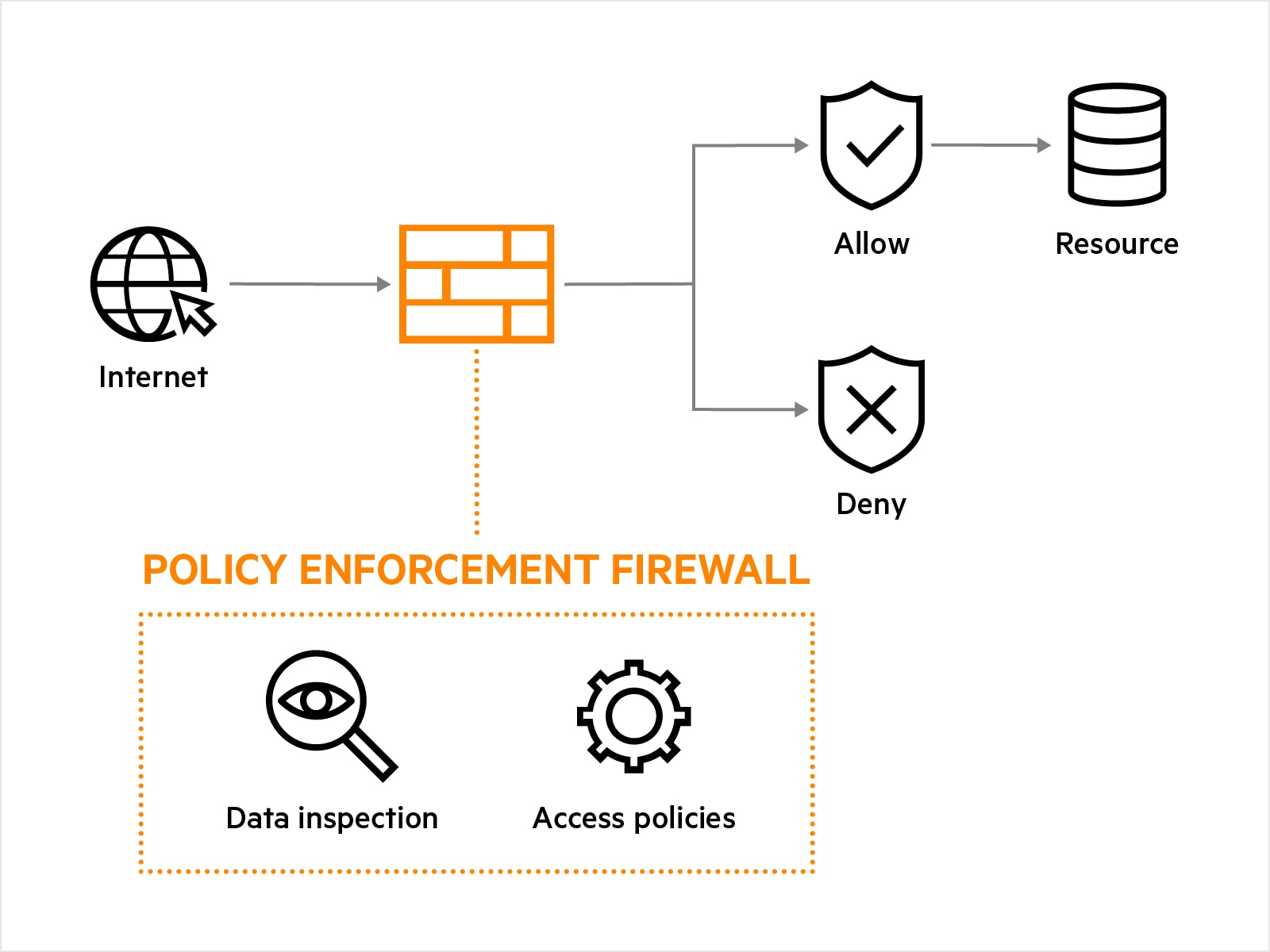
Network firewalls analyze inbound and outbound network traffic, checking for IP address, communication protocols, content type, and other traffic characteristics. After analyzing the characteristics of the traffic, the network firewall blocks or allows traffic based on established firewall policy.
Network firewall security is often required to achieve security, privacy, and compliance mandates, such as the Federal Information Security Modernization Act (FISMA) in the U.S. and the globally recognized Payment Card Industry Data Security Standard (PCI DSS).
How does a network firewall work?
Network firewalls enforce policy based on access control mechanisms. Mechanisms can be defined policies, allow/deny rulesets, and other guidelines that specify how traffic should be treated based on its characteristics.
Network firewalls examine data within the four Transmission Control Protocol/Internet Protocol (TCP/IP) communication layers: (from highest to lowest) application, transport, IP/network, and hardware/data link. TCP/IP layers guide movement of data from origin to destination. The more advanced the network firewall security technology, the more and higher order layers that can be examined. The ability to gather more information allows advanced network firewalls to provide finer traffic controls and more detailed accounting.
Which network firewall is best?
Not all network firewalls are created equal. With hybrid work, mobility, and IoT adoption on the rise, network firewalls that use rules and physical network configuration based on IP addresses are no longer adequate. The HPE Aruba Networking Policy Enforcement Firewall (PEF) provides identity-based controls to enforce application-layer security and prioritization.
PEF is a proven technology that runs on over 4 million installations worldwide. Organizations using PEF technology can implement a Zero Trust access model that uses identity, traffic attributes, and other context to centrally enforce access privileges at the time of an initial connection. Because of its technology and ability to dynamically enforce secure role-based policies, PEF has been designated a “Cyber Catalyst℠” solution by Marsh based on its ability to effectively reduce risk. Cyber Catalyst enables customers that adopt designated technologies to be considered for enhanced terms and conditions on cyber insurance policies from participating insurers.
What are the benefits of network firewall?
- Enforce access privileges to reduce risk. Network firewalls that only allow traffic that has been expressly permitted to pass—”deny by default”—can support Zero Trust security architectures.
- Limit access to sensitive resources. Network firewalls can prevent unauthorized users from accessing sensitive and confidential data, such as patient data and financial information.
- Protect the network from cyberthreats. Attacks caused by malware or threats propagated by malicious websites visited by users within the organization can be blocked and prevented by network firewalls.
What are the types of firewalls?
| Firewall type | What it does |
|---|---|
| Packet filtering firewall | Inspects ingress (incoming) and egress (outgoing) traffic and allows/denies passage of the traffic based on basic information like source and destination. A packet filtering firewall does not keep track of the state of incoming or outgoing traffic, and thus is also known as a stateless firewall. Due to their limitations, stateless packet filtering firewalls can be vulnerable to attacks and exploits targeting the TCP/IP stack. |
| Stateful firewall | Utilizes stateful inspection to track traffic and block traffic that deviates from expected patterns. Stateful firewalls check connections against established connections tracked in a table and can deny traffic based on rules and non-conformity with established connections. This allows stateful firewalls to protect against attacks like Distributed Denial of Service (DDoS). |
| Application firewall | Builds on statefulness capabilities with deep packet inspection functionality. Application firewalls analyze data at the application layer, comparing observed events to established patterns of activity to identify deviations and prevent threats. Application firewalls can thwart attacks carried out by unexpected commands, such as buffer overflow attacks, DoS attacks, and malware. |
Network firewall FAQs
What are the key components and features of network firewalls?
Modern network firewalls combine a stateful inspection engine, L3–L7 application control, IPS, SSL inspection, URL filtering, Zero Trust micro segmentation, sandboxing, AI-driven threat intelligence, hardware acceleration, and policy optimization to improve efficacy without sacrificing performance.
What are some use cases for network firewalls?
Network firewalls are used to secure the enterprise edge, branches, data centers, and cloud workloads with a consistent Zero Trust policy. They protect applications, enable remote access, enforce east west micro segmentation in data centers, and deliver high performance threat prevention for hybrid and multi cloud environments.
What are the best practices for network firewall management?
Best practices for network firewall management focus on clear, least privilege policies, regular rule reviews and cleanup, and consistent enforcement across environments. Centralized management, continuous monitoring, and periodic audits help reduce risk, improve visibility, and ensure firewall policies stay aligned with Zero Trust principles.
How do I configure a firewall for network security?
To configure a firewall for network security, start with a deny-by-default policy, allow only required ports and applications, and segment traffic by zones. Apply least privilege rules, enable logging and monitoring, inspect encrypted traffic where needed, and regularly review and update policies to align with Zero Trust principles.
What is the difference between network firewall vs. hybrid mesh firewall?
A network firewall is a single security enforcement point deployed at a specific location (edge, branch, or data center) to control traffic for that environment. A hybrid mesh firewall is an architecture that connects multiple firewalls - physical, virtual, and cloud -under centralized management to deliver consistent policy, visibility, and enforcement across hybrid and multi cloud environments.
Why do I need a firewall for my network?
A firewall is needed to control and secure traffic between trusted and untrusted networks. It enforces access policies, blocks malicious activity, reduces the attack surface through segmentation, and helps prevent lateral movement, providing essential protection for users, applications, and data across modern, connected networks.